March 9, 2026 |

|
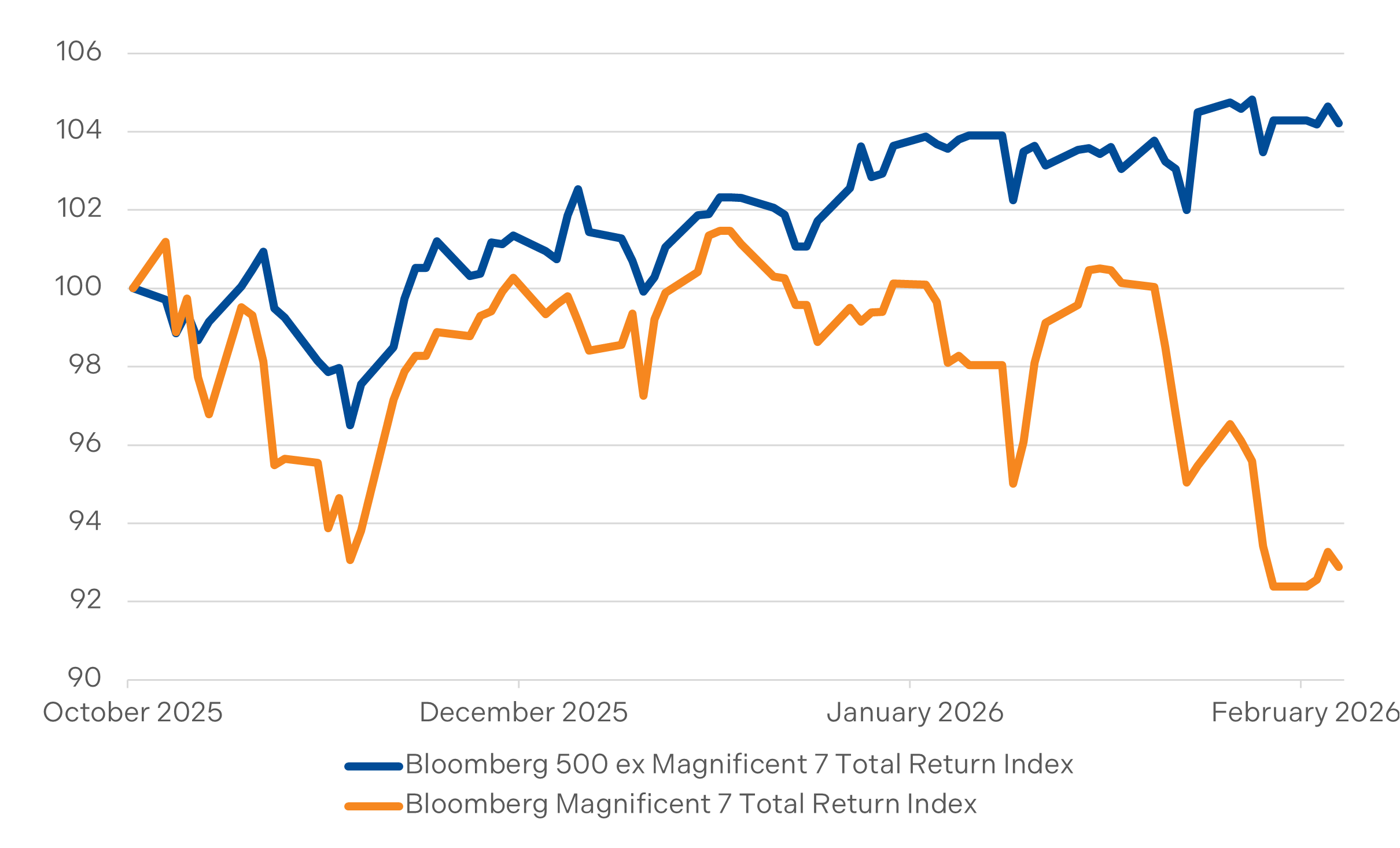
Funds in focus: Brompton Enhanced Multi-Asset Income ETF Building an investment portfolio is about far more than just picking stocks. In our view, diversification and portfolio construction are cornerstones of sound investing and are just as important as security selection. Diversification involves spreading investments across sectors, regions, asset classes, and themes to reduce risk, smooth returns, and potentially generate better risk-adjusted returns for the investor. Portfolio construction is the process of evaluating overall portfolio risk, including its exposure to various factors, industries, and other idiosyncratic risks. A portfolio that relies too heavily on one single area of the market can experience larger swings when that segment of the market moves sharply. Diversification helps offset this by ensuring that the various parts of a portfolio react in different ways to economic changes. For example, equities can provide growth and dividend income during stable markets, while fixed income securities, including preferred shares, tend to act as stabilizers when markets are volatile. Managing Concentration Risk in Today’s MarketTo illustrate why diversification is so important, consider the concentration risk in the S&P 500 Index where the “Magnificent 7” technology giants now represent almost one third of the index’s value. If an investor’s portfolio is overly concentrated in these top names and they begin to underperform as they have since October 2025 (Figure 1), the overall portfolio could suffer substantial losses. By diversifying across a broader range of asset classes, geographies, sectors and companies, investors can protect themselves from the impact of sharp declines in just a few stocks or single sector. |
|
|
A Diversified Portfolio in One ETFBrompton Enhanced Multi-Asset Income ETF (BMAX) offers a unique multi-asset approach which combines global equities and fixed income securities (including non-traditional preferred share investments) into a diversified portfolio solution. By combining a variety of investment strategies, diversified by geography, sector and asset class into a single exchange-traded fund, BMAX provides investors with an efficient way to access a portfolio built for various market conditions. This multi-asset blend has provided strong historical performance with lower volatility compared with single asset class indices.1 Exposure to Key Market ThemesBMAX is also currently constructed to provide investors with exposure to key themes in the market. In global infrastructure, the Fund continues to benefit from two key macro trends: the acceleration of U.S. domestic manufacturing from reshoring and the surge in electricity demand fueled by the growth in Artificial Intelligence. After being flat for two decades, US electricity demand is expected to grow again due largely to data centers driven by AI workloads. This substantial increase in power demand creates bottlenecks for power grids and emphasizes the continued need for major investment in infrastructure, including generation and distribution assets, and advanced cooling technologies. With the largest tech companies continuing to increase their capital expenditure budgets, this need is only getting stronger. In additional to data center demand, infrastructure spending continues to benefit from the reshoring trend, which has been driven by concerns over supply chain vulnerabilities and supported by government legislation such as the CHIPS Act as well as tariffs that the Trump administration was poised to enact on global imports. In financials, the banks and life insurance companies should continue to be positively impacted by a normalization of interest rates, while capital markets activity has been very strong and significant regulatory relief is on the horizon. In technology, BMAX continues to benefit from its exposure to what we view are the leading companies in Artificial Intelligence, particularly in semiconductors, while its European and international holdings have performed well as investors diversify away from America. Additionally, we believe that Healthcare and Low Volatility are both poised to perform well in 2026, while the fund’s exposure to preferred shares and investment grade fixed income should continue to provide stability to the portfolio. Stay Invested with ConfidenceDiversification doesn’t remove risk completely, but it helps manage it. By blending assets that perform differently in varying conditions, investors can stay invested with greater confidence. |
| Compound Annual Return² | ||||
|---|---|---|---|---|
| Current Distribution Rate³ | 1-Yr | 3-Yr | Since Inception | |
| Brompton Enhanced Multi-Asset Income ETF (BMAX) | 10.0% | 17.3% | 17.4% | 17.9% |

Michael D. Clare
Senior Vice President & Senior Portfolio Manager
Michael Clare has over 18 years of experience in financial services and is a Senior Vice President and Senior Portfolio Manager with Brompton Group. Mr. Clare is a member of Brompton’s portfolio management team and is a co-manager of investment funds at Brompton with combined assets of approximately $3 billion. He specializes in portfolio construction, security analysis, and covered call strategies with a focus on technology, health care, financials, energy, global equities, and low volatility strategies.