
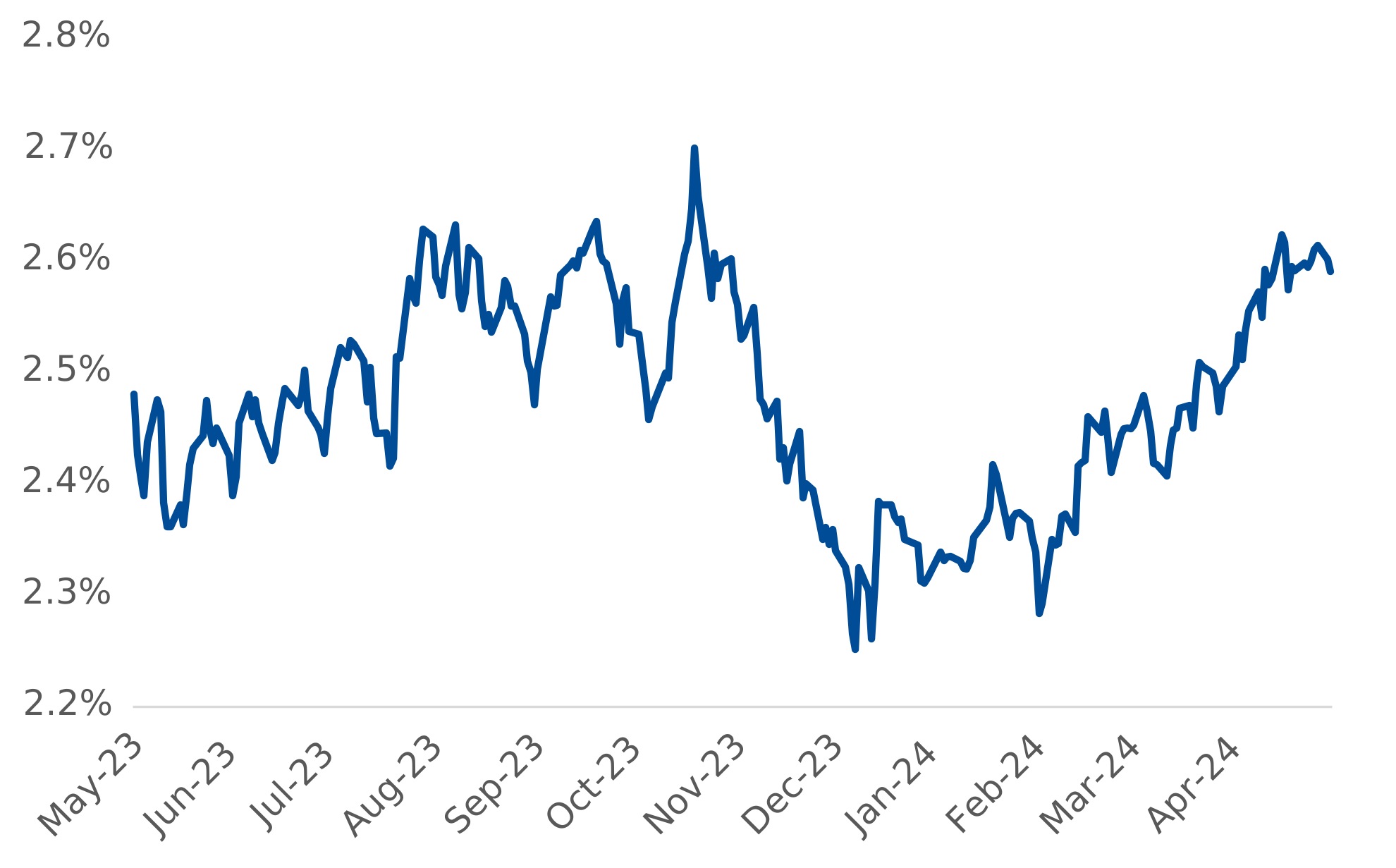
In an August 2022 Brompton Insights we stated that, after moderating from the extreme levels of 2022, inflation would likely be here to stay for the foreseeable future. Our view at the time was that several sources of supply-side inflation would persist because of their structural nature. Fast forward to today and our view has not changed. U.S. inflation has continued to run above the Federal Reserve’s target level of 2% (Figure 1), and the most recent reading of 3.5% is above where it was in mid-2023 when year-over-year inflation hit its current cycle low of 3.0%. Additionally, measures of forward-looking inflation have begun increasing again, with the 5-year forward inflation swap – a measure of the market’s inflation expectations over the next 5 years – rising from a recent low of 2.25% in December to 2.59% currently (Figure 2).
Figure 1: Inflation Has Remained Above the Fed’s Target
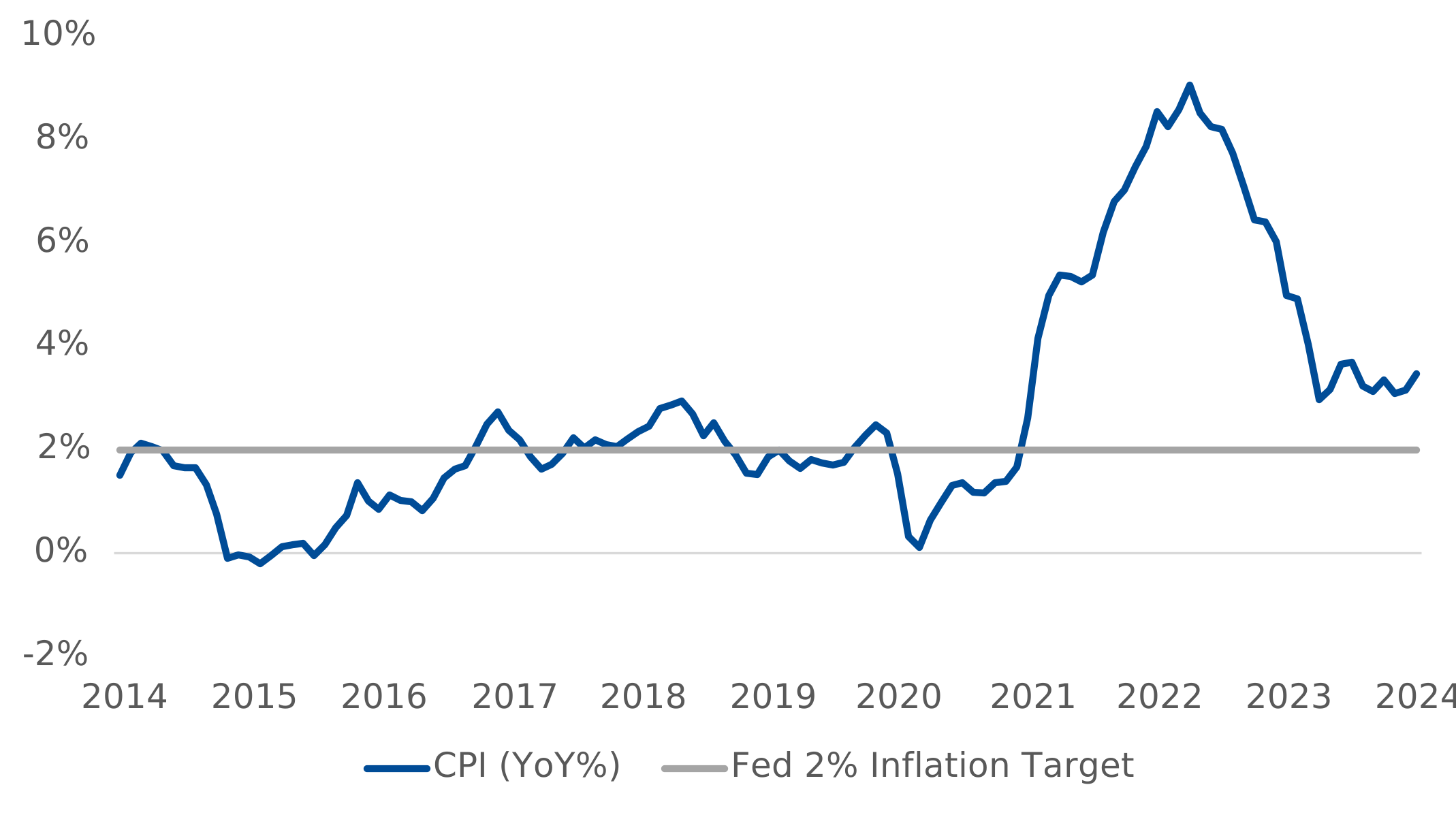
Figure 2: 5-year Inflation Expectations Have Risen
While inflation levels have clearly moderated from the pandemic era high of 9.1%, and while the Fed has done a good job of managing demand-side inflation and ensuring inflation expectations did not become entrenched, the last mile of the inflation flight remains challenging. In our view, there are several sources of supply-side inflation that continue to persist:
- Wars on multiple fronts, including related sanctions
- The reversal of many globalization trends with a recent shift towards onshoring or “friendshoring”
- A decade of underinvestment in many basic necessities, such as commodities, housing, and infrastructure
- Demographics, particularly as the baby boomer generation gets older
- The cost of climate change and decarbonization
In addition to the factors above, we believe that many market participants continue to underestimate the fiscal impact of interest rate hikes on the economy. While higher interest rates are generally used to tighten the economy through the lending channel, we can’t ignore the income channel where higher rates are a net positive for many people, particularly the higher end consumer who is able to increase spending as a result of higher interest income.
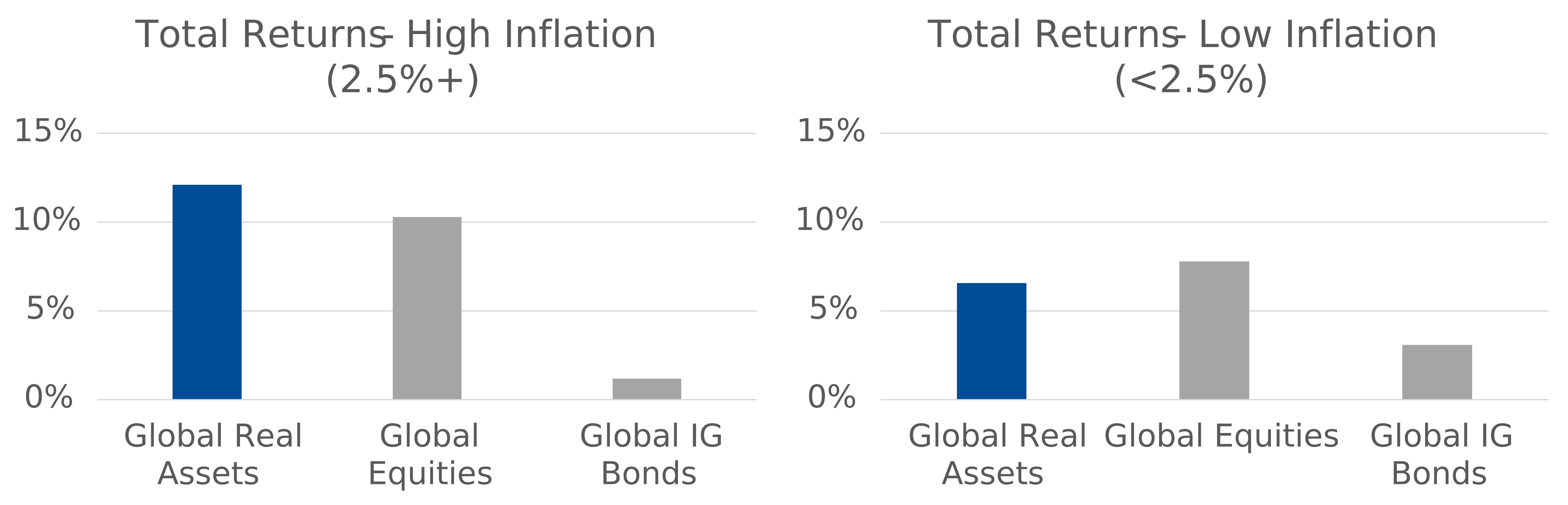
With inflation likely here to stay for the foreseeable future, investors should look for strategies that perform well in inflationary environments, such as real assets. Real assets – including power, infrastructure, energy, real estate, telecommunications, and related sectors – can often act as a powerful inflation hedge. These are long life, physical assets that often produce essential products or services and are characterized by high barriers to entry, low maintenance capital requirements, and strong pricing power. Real assets have historically outperformed during inflationary periods. As shown in the chart below (Figure 3), real assets have exhibited strong performance on both an absolute and relative basis during periods when inflation is above 2.5%. Given our belief that inflation is here to stay and our view that real asset valuations have already adjusted to higher interest rates, we believe that investors would be well served by adding a real assets investment in the current environment.
Figure 3: Real Assets Outperform During Periods of High Inflation
Brompton’s Approach
Brompton Sustainable Real Assets Dividend ETF (BREA) provides diversified exposure to global real asset companies including Infrastructure, Utilities, Energy, Materials and Real Estate sectors. Many investment fund strategies currently on the market focus only on one main sector, such as Infrastructure, REITs (real estate), or Energy. Brompton believes that having a broader investment universe with diversified exposure to multiple real asset sectors enhances the opportunity for capital appreciation while also providing “one-stop shopping” for investors.
Sustainable Power & Infrastructure Split Corp. (PWI) offers leveraged exposure through Class A shares, to a globally diversified portfolio of sustainable power and infrastructure companies for investors seeking enhanced capital appreciation potential and high monthly cash distributions. The portfolio may include companies operating in the areas of renewable power (wind, solar, hydroelectric), green transportation (electric vehicles, energy transportation and storage, railroads, carbon capture), energy efficiency (smart grids, smart meters, building efficiency), and communications (communication networks, 5G wireless technology), among others.
We prefer to invest in companies that are market leaders with strong balance sheets and have predicable free cash flow. We believe this strategy provides better risk-adjusted returns, particularly in an inflationary environment. In addition, diversified sector exposure mitigates investment risks in a volatile macro environment. We actively manage each Fund’s sector weightings to seek to provide investors with optimal sector exposure depending on the state of the economy. We also use an actively managed call writing strategy to generate additional income and reduce overall portfolio volatility.