
With the U.S. markets trading close to the top end of their valuation range, investors have been hunting for value in Europe. European equities are trading at near historic discounts relative to the U.S. It is not only the deeper than normal valuation discount that makes European stocks look attractive, but also the valuation expansion supported by global economic recovery, cooling inflation, and resilient corporate earnings that underpins our European equity bull thesis. Most investors don’t realize that the STOXX 600 Index total return kept up with the S&P 500 Index over the past 2 years in local currency terms due to improving earnings prospects in Europe.
Europe Valuation Discount to the U.S.
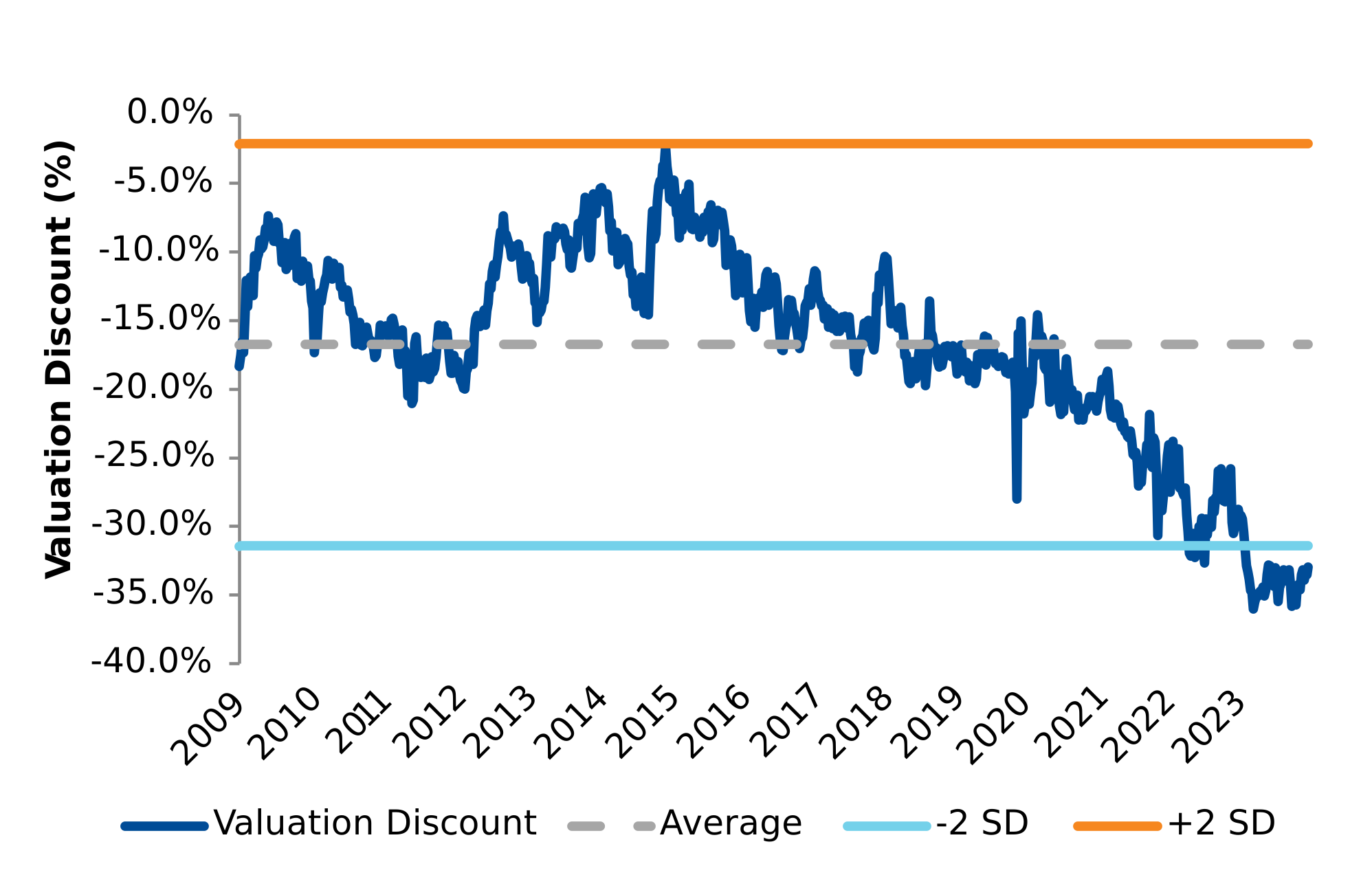
Based on rolling forward 12 months P/E multiples for the STOXX 600 and the S&P 500
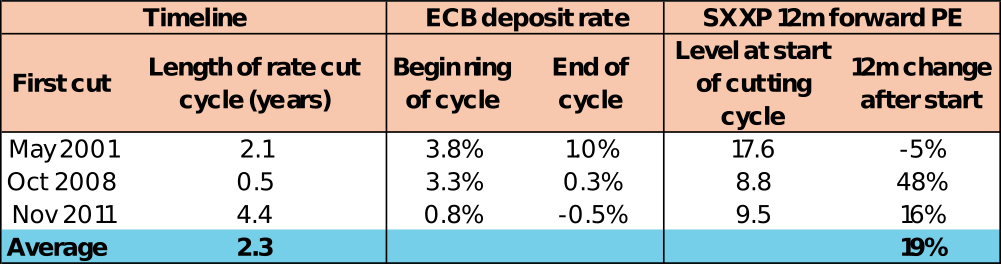
In general, the European economy has higher foreign exposure and is therefore more sensitive to global economic cycles than the U.S. Recent global leading economic indicators have shown signs of improvement in the macro environment. With the global economy on the rise, valuations of European equities, especially the cyclical names, should continue to advance. Goldman Sachs research shows that a one-point rise in global manufacturing Purchasing Manager’s Index (PMI) will bump the 12-month forward P/E of STOXX Europe 600 Index by 1.2%.1 Furthermore, lower inflationary pressure has notably brought down energy costs. The labour market remains tight, but the pace of wage growth is decelerating. This should set the stage for the European Central Bank (ECB) to start its first policy rate cut. Over the past three ECB monetary loosening cycles, the 12-month forward P/E for the STOXX Europe 600 Index rose by 19% on average one year after commencing rate cuts.
STOXX Europe 600 Index Forward P/E Expanded 19% on Average Over Past Three ECB Cutting Cycles
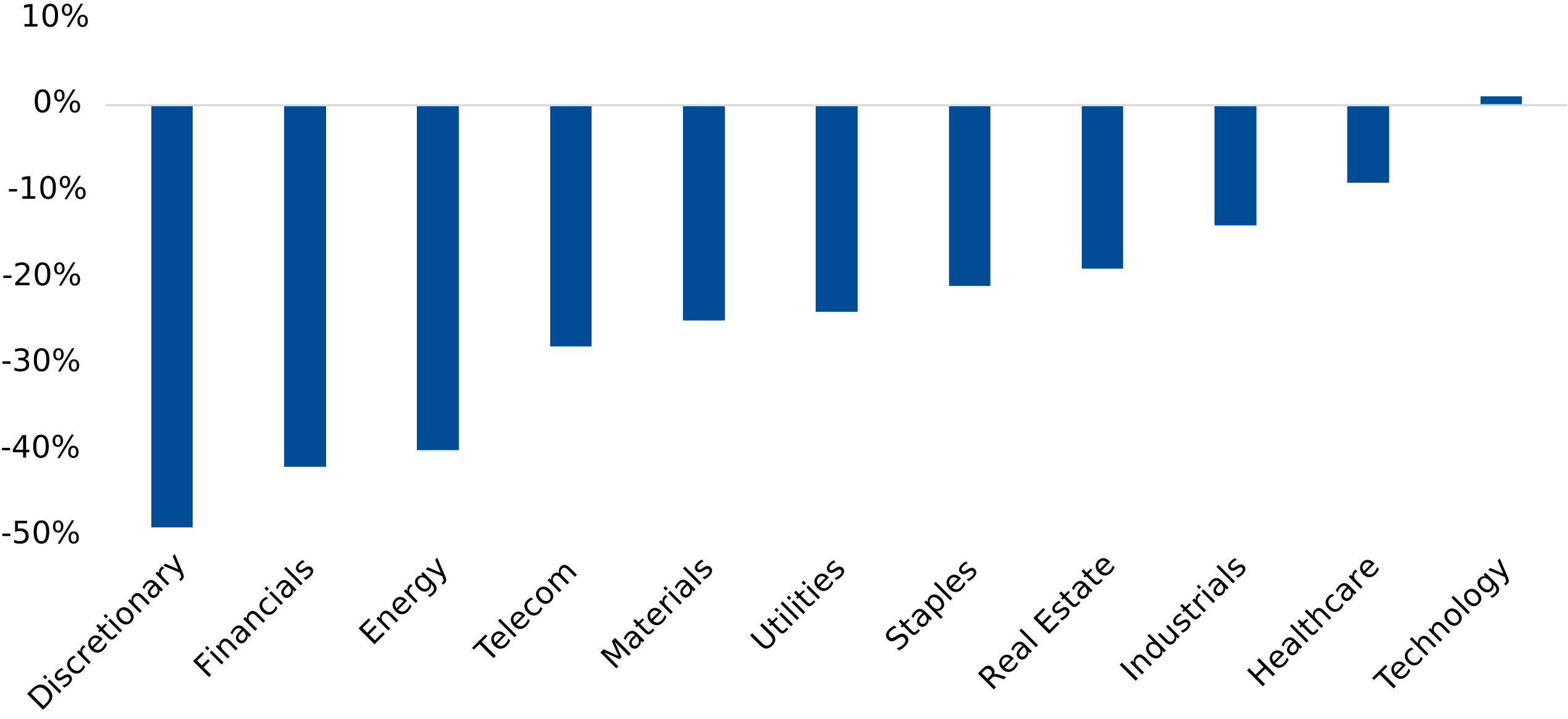
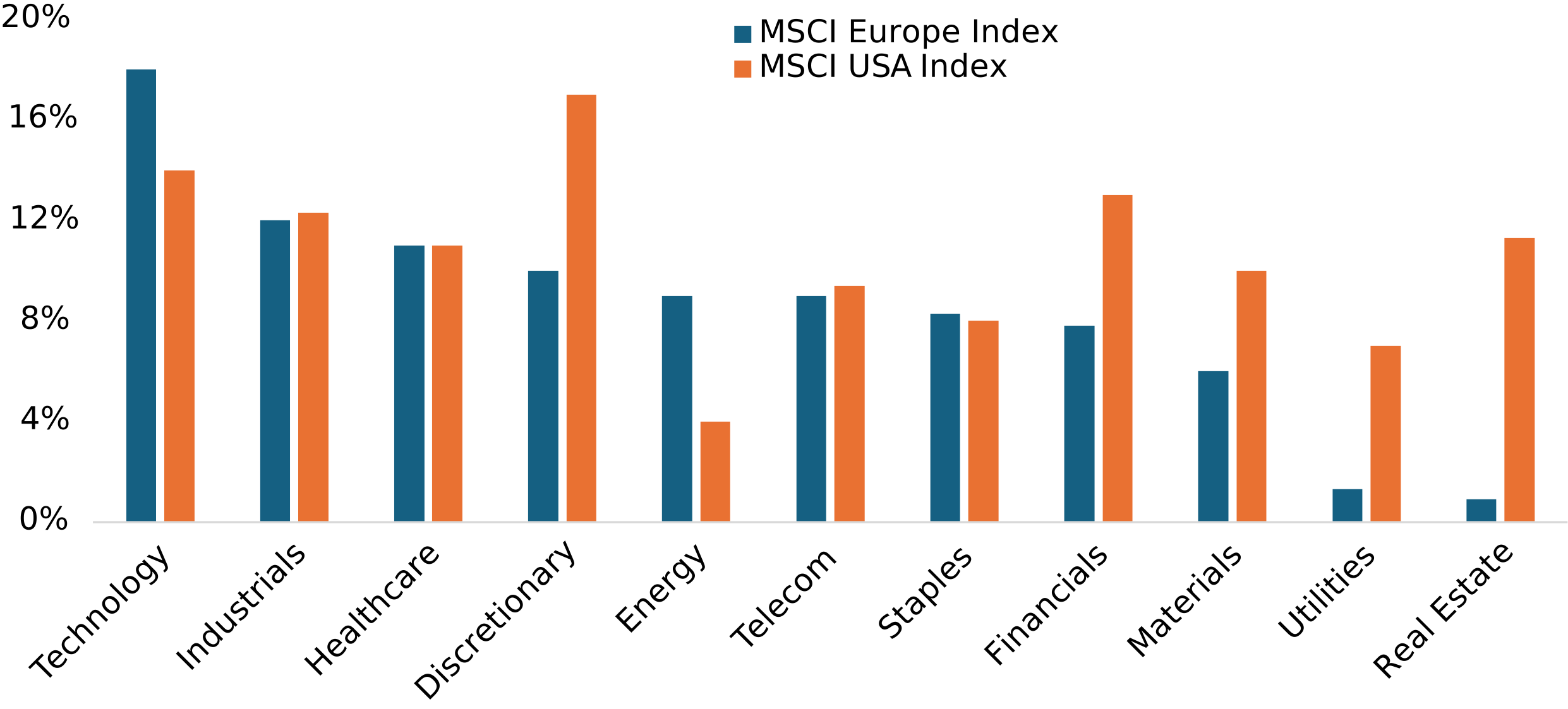
Ten out of eleven European sectors are trading at discounts relative to the U.S. peers, in which gaps are significantly wide in Consumer Discretionary, Financials, and Energy. More importantly, several European sectors offer higher or similar earnings growth prospects compared to their U.S. counterparts but trade at lower multiples, namely Industrials, Healthcare, Energy, Telecoms, and Consumer Staples.2 For the most recent earnings season, a growing percentage of European companies discussed key thematic drivers such as artificial intelligence, M&A, and deleveraging, while seeing declines in themes such as economic uncertainty”, energy cost, and inflation. In particular, capital return mentions in European corporate transcripts are trending above 20-year highs and catching up with the rising pace of discussion of this topic in the U.S.3 This is evidenced by the fact that total Q4 2023 shareholder returns (dividends and buybacks) generated by corporate Europe reached close to decade highs at approximately EUR 550 billion. This translates into a 4.4% total return yield (dividend plus share repurchase yield), compared to the highest level of 5.3% in June 2022.4
12-month Forward P/E Premium/(Discount): MSCI Europe Index vs. MSCI USA Index
FY3 Net Income Growth (in USD)
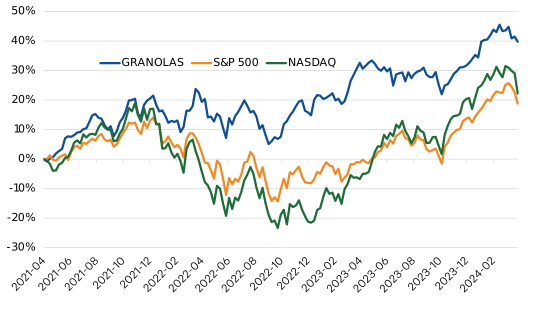
So how should investors position themselves in European equity markets? Most investors’ portfolios are highly concentrated in the U.S. and Canada, as these are the markets we are most familiar with due to the so-called home country bias. Market access to Europe may be limited to most retail investors as well. On a sector level, Technology is likely the largest weight in their portfolios. European markets provide investors with a more geographically diversified selection of companies outside of Tech, without compromising the upside potential. For example, the most invested large-cap European equity basket “GRANOLAS” (GSK, Roche, ASML, Nestlé, Novartis, Novo Nordisk, L’Oréal, LVMH, AstraZeneca, SAP, Sanofi) has demonstrated an impressive return compared to U.S. broader indices such as the S&P 500 and NASDAQ over the past 3 years. Even compared to the “Magnificent 7”, one of the best-performing U.S. equity baskets, GRANOLAS offers much less volatility. In this vein, adding European equities helps boost risk-adjusted return, or the Sharpe ratio, from a portfolio construction perspective. Although stocks in many industry groups have registered superior returns, such as luxury, pharmaceuticals, autos, banks, capital goods, etc., we do believe it is a stock picking market, and this is especially true for Europe.
GRANOLAS Outperformed U.S. Indices
GRANOLAS Offers Lower Volatility Than Magnificent 7

Source: Bloomberg as of April 19, 2024
Brompton’s Approach
Brompton European Dividend Growth ETF (EDGF) focuses on large European companies that grow their dividends. They tend to be leaders in their respective segments. Their leadership positions allow them to remain resilient in times of uncertainty and their operational scale drives strong economics.